Taj Mahal Agra India
Looking at the magnificent structure, one realizes why The Taj Mahal is
The Seventh Wonder of the World. There is so much around Taj Mahal that
tourists often miss out on its must-visit aspects. Here presenting a
tour Planner to Taj Mahal Agra…

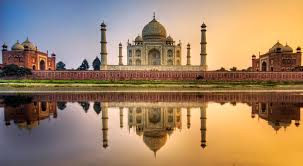
The Taj Mahaloften from and "crown of palaces", pronounced also "the Taj") is a mausoleum located in Agra, Uttar Pradesh, India. It was built by Mughal emperor Shah Jahan in memory of his third wife, Mumtaz Mahal.
The Taj Mahal is widely recognized as "the jewel of Muslim art in India
and one of the universally admired masterpieces of the world's
heritage"

Taj Mahal in Agra is one of the most visited landmarks in the world
Built by Mughal Emperor Shah Jahan, in early 17th century, in the fond
memory of his late wife, The Taj Mahal Agra is proclaimed as the symbol
of love for billions all around the world. Voted as the Seventh Wonder
of the World, The Taj Mahal is an elegant architectural delight that
showcases the depths of Indo-Islamic and pre-Islamic India styles of
architecture.

Tourists from any part of the world, when visiting India, never forget to include a tour to Taj Mahal in their itinerary.

How to Reach Taj Mahal?
The Taj Mahal Agra is about 220 km from Delhi, India and is well
connected by air, rail and road. The nearest airport to Taj Mahal is
Kheria Airport (9 km). The city is well connected to almost whole of
India through railway. The nearest railway station to Taj Mahal is Agra
Cantt Railway Station (7 km).

What is the best time to go on Taj Mahal tour?
The summer months are not suitable for Taj Mahal tours as the
temperature in Agra is very hot and humid. Therefore, plan your Taj
Mahal Agra tour in the comparatively pleasant months of October to
March.
What to do during Taj Mahal Agra trip?
Only when you witness the magnificent building from your own eyes, then
you realize the reason for its immense popularity. There is so much to
watch in and around Taj Mahal:
• The entrance gate is built with red stone and is very beautiful.
• The Taj Mahal’s beauty is enhanced by its spectacular dome, which is made up of white marble.
• The most famous sight around Taj Mahal is of the four stunning
gardens, modeled after Persia’s Char Bagh, with a pool at centre and
waterways all around it. Gorgeous!
• The grave of Emperor’s late wife, Mumtaz Mahal is kept inside
mausoleum and Allah’s 99 names are written on it. The walls plastered
with floral motifs and beautiful Jali work are simply stunning.
• The tour to Taj Mahal is not completed if you did not view the
glorious mosques on both sides of Taj Mahal along with the surrounding
four minarets, rising up to 40 meters in height.
• The sight of Taj Mahal in the dark moonlight is spectacular. You must
buy tickets for night time Taj Mahal Tour. It is a sight that will be
entrenched in your memory for a long time… may be till eternity.
Grave of Wife Mumtaz Mahal
Once you walk up to the top of the steps, you are afforded a nice view
of the Yamuna River, with Agra Fort partially visible on the left.
Don't even think about swimming in here, though.
A close-up of the intricate marble work of the Taj Mahal, at the
entrance to the tomb itself. Unfortunately, photography is prohibited
inside the tomb, so no photos to share.
Once you tour the inside of the tomb, you are afforded a view of the mosque (as I recall, you can't go inside).
Here is a close-up of the artwork in the marble of the main building.
And finally, a view of the garden from the top of the steps in front of the tomb building.
Where to Stay
Two hotels in Agra tend to be considered theplaces to stay if you want to overnight in Agra. The Taj Group offers The Gateway Hotel,
located approximately 3 km from the Taj Mahal. Prices currently range
from $70-150 per night, with prices generally lower during monsoon
season (June-September). If you REALLY want to treat yourself, the
famous Oberoi Amarvilas
offers stunning views of the Taj Mahal right from your room - but you
will pay for the experience, with prices ranging from $265-625 a night,
depending on the season. If neither place strikes your fancy, there are
a multitude of 3-4 star, Western-quality hotels that you can get for
less money; contact a travel agent that specializes in India for more
details.


Perfect proportions,lovely geometrical patterns, magnificent gardens and splendorous fountains, love story... Taj Mahal is the beauty personified!


